
Mold remediation in Jacksonville costs $500–$6,000 for most homes — contained single-area colonies at the low end, post-storm multi-room work at the top. Every scope includes containment, material-honest removal, clearance verification, and the moisture fix that prevents the sequel.
The remediation sequence, material-by-material honesty, and the pairing that ends reruns.
The sequence that protects the rest of the house
Disturbing a colony without containment seeds the whole house — so the sequence is fixed: contain the zone under negative air with HEPA filtration; remove what's colonized through, clean and treat what's surface-affected; dry everything to readings, not to touch; clear with verification before barriers drop. On the First Coast we run this weekly in AC closets and post-storm interiors alike; the discipline is identical at every scale.
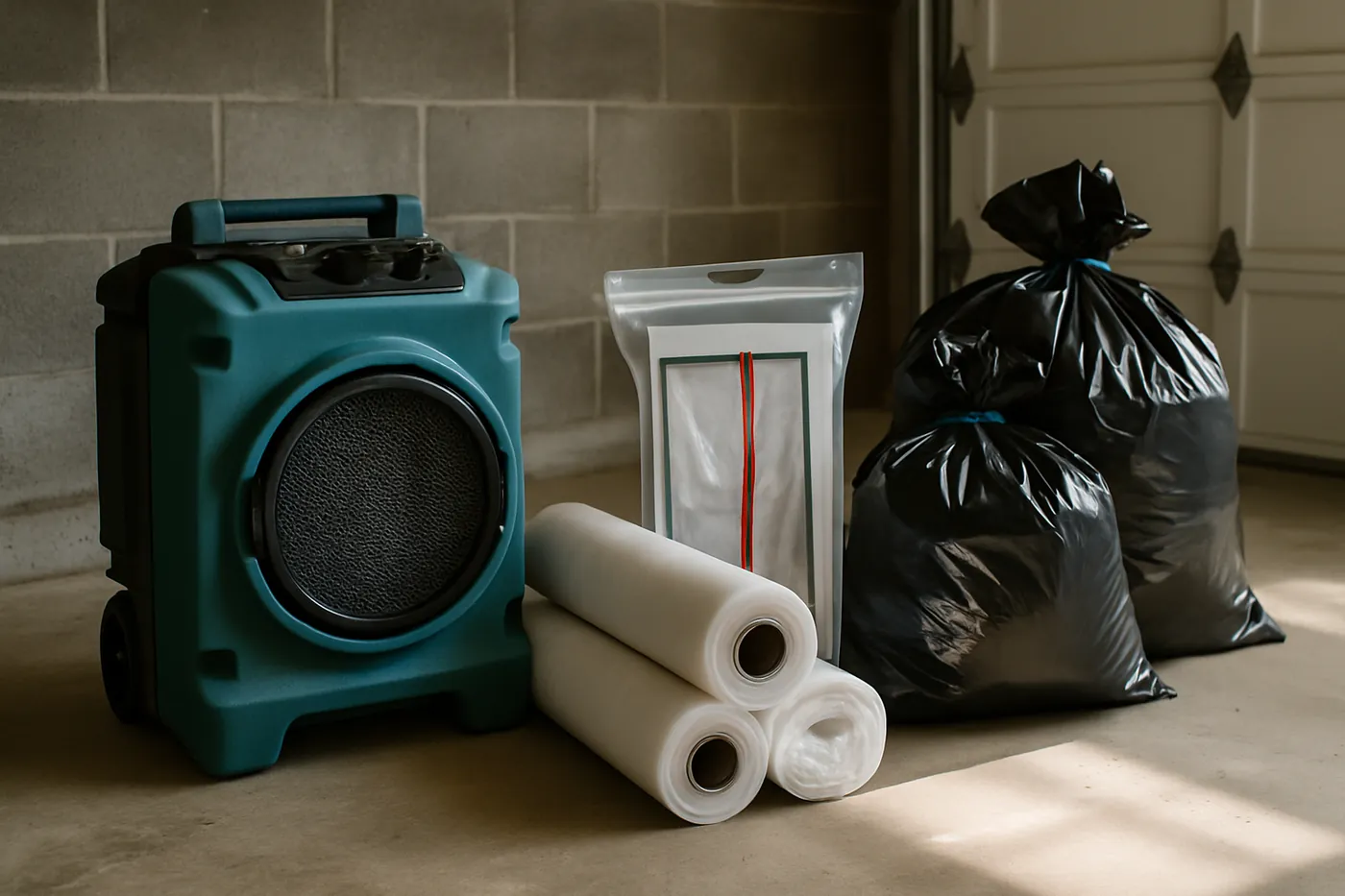
Materials, treated honestly
| Material | The honest call |
|---|---|
| Drywall, insulation with growth through | Removed — nothing rescues colonized gypsum or batts |
| Framing and structural wood | Cleaned, treated, dried to spec — almost always savable |
| Wetted-but-clean materials (early response) | Dried fast and saved — the argument for calling early |
| Contents and finishes | Item-by-item triage, documented for insurance where relevant |
The pairing, in the scope
Jacksonville colonies always name their water: the sweating air handler, the storm's intrusion, the attic's ventilation, the coast's baseline humidity. Removal without correcting the source is subscription mold control — so the correction is written into every scope beside the removal, priced plainly. One campaign, clearance-verified, cause retired.
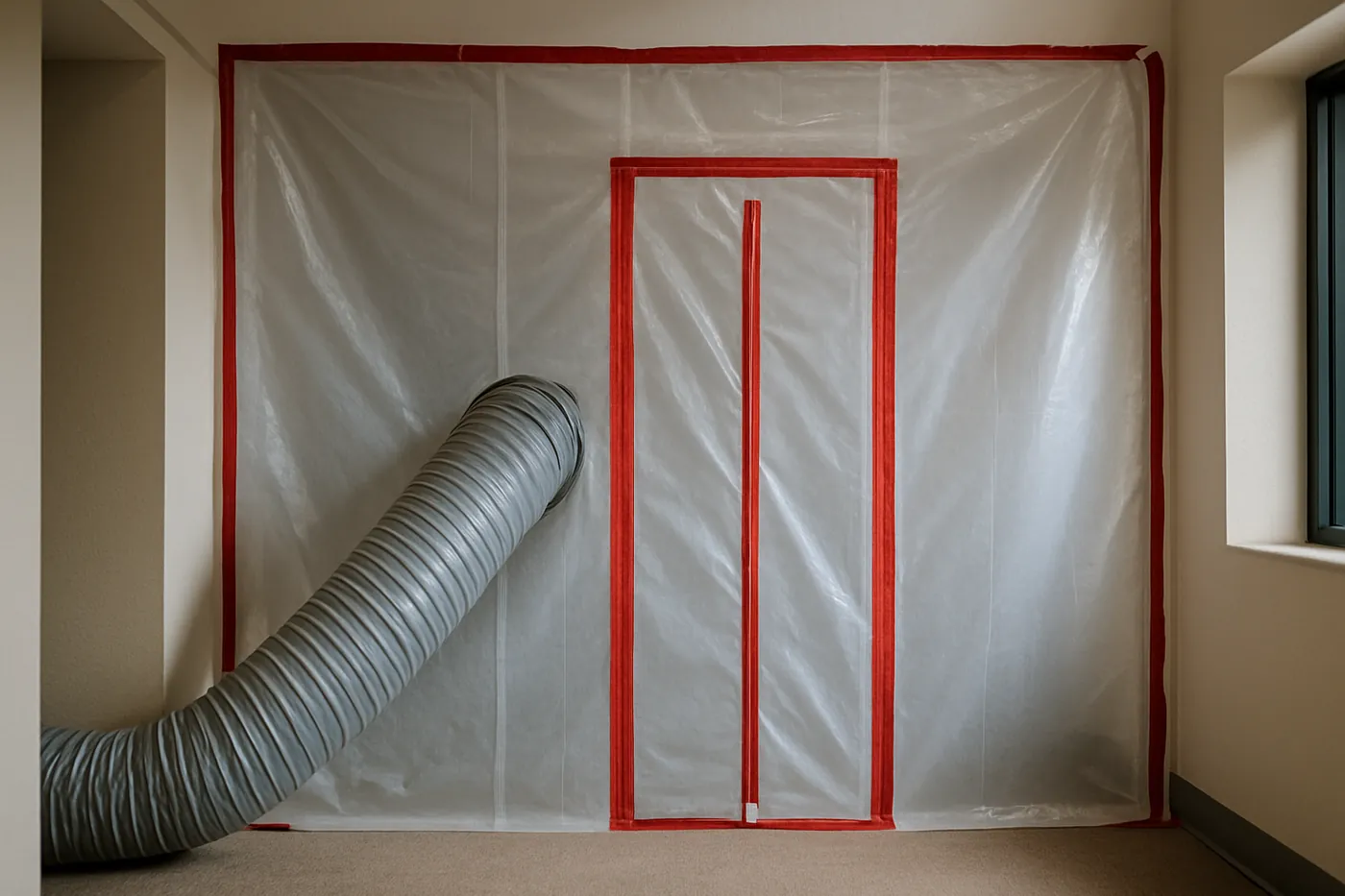
Containment first: what professional remediation actually looks like
The visible scrubbing is the smallest part of real remediation. The job starts with containment — poly sheeting sealing the work area, a zippered entry, and negative air pressure from a HEPA scrubber so spores disturbed by the work exhaust through a filter instead of migrating into the rest of the house through the AC. Then removal: porous materials that mold has colonized (drywall past the stain line, insulation, carpet pad) leave in sealed bags; structural wood gets cleaned, HEPA-vacuumed, and treated rather than replaced. The scrubbers keep running after the visible work ends, because the standard is air, not appearance.
What separates remediation from a wipe-down in this climate is the exit criteria. Work here ends when moisture readings in the affected materials are back under thresholds and the source correction is in place — not when the surfaces look clean. A Jacksonville job that skips either half has a return date; the humidity guarantees it.
Remediation questions, straight answers
What does mold remediation cost in Jacksonville?
Contained single-area jobs run $500-$1,500; multi-room work $1,500-$4,000; post-storm remediations with demolition $3,000-$6,000+. The spread and the demolition line set the price, and both get mapped at inspection before any number exists.
What does proper containment involve?
Sealing the work zone under negative air so disturbed spores can't tour the house: plastic barriers, HEPA-filtered air movement, protected pathways. It's the difference between removing a colony and redistributing one — and it's the step budget outfits skip first.
Do you use 'the spray' or actually remove materials?
Both, by material: porous materials with growth through them (drywall, insulation) come out — no chemical rescues colonized gypsum; semi-porous and structural wood gets cleaned, treated, and dried to spec. Anyone promising spray-only remediation of soaked drywall is selling air freshener.
How do I know the job actually worked?
Clearance: post-work verification — visual standards, moisture readings back to spec, and third-party testing on larger jobs — before containment comes down. You get the documentation trail; on insurance work, so does the adjuster.
Will it come back?
Not if its water is gone — which is why every scope pairs removal with the moisture fix: the AC correction, the intrusion repair, the humidity control. Remediation kills the colony; the pairing cancels the franchise.
Book a Jacksonville mold inspection
Tell us what you're seeing — spots on a wall, a musty room, a leak that got away — and we'll schedule an inspection with photos and moisture readings. Active water gets priority scheduling.